|
| |
THE
PAINTED MASONIC VISIONS
OF
ARI
ROUSSIMOFF
By
Vivian Forlander
For the
artist, painter and filmmaker Ari Roussimoff, whose artworks have been shown in
over eighty international exhibitions, symbols are the language of
communication. A visually oriented person and a painter, he was drawn initially
to the esoteric symbols of Freemasonry, which he had observed in the
architecture of buildings. After years of noticing,
appreciating and researching these symbols in book illustrations, Masonic
artifacts, such as aprons, ceramics, swords, and jewels, Roussimoff joined the
Masonic fraternity, which embodied the ideals behind those symbols.
Noting
that the symbols which inspired him were mostly used as learning tools, such as
tracing boards, and in ritual objects, Roussimoff wanted his paintings to
integrate Masonic symbolism into a larger world picture, in which these symbols
and their ideals embody a vision of humankind.
Because Freemasonry is a way of life and a world vision, Roussimoff’s
paintings (while not divulging secrets) take the many Masonic symbols out of
orthodox Masonic context and incorporate them into a universal language.
The
Livingston Library & Museum played an instrumental role in Roussimoff's
joining the Craft. With Director Thomas Savini's gracious support, Roussimoff
spent many hours
researching and studying the artifacts. The library became a sort of home base
for Roussimoff, who had many conversations with Br. Savini about the history,
culture and arts of Freemasonry. The library also provided him with an
opportunity to meet other scholarly Brothers. Roussimoff, who has also created a
video short of the many Masonic treasures in the library, believes that an inner
force led him toward Freemasonry by way of the library.
Three
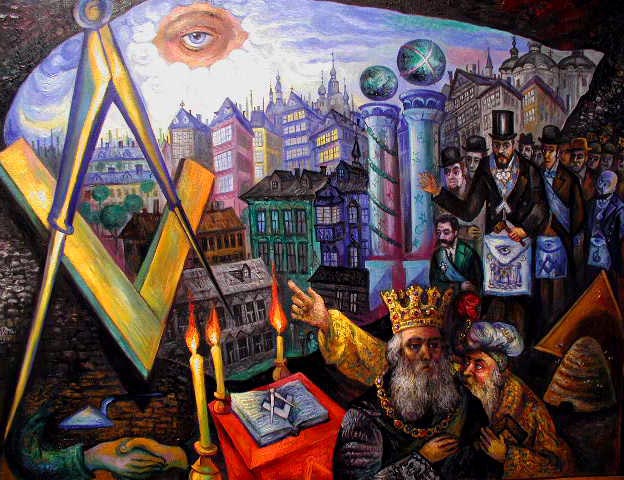
Roussimoff paintings, King
Solomon’s Vision and
Masonic
Apron: The Legacy of Hiram Abiff,
(both paintings are currently
displayed in the Robert R. Livingston Library and Museum in
New York City
) and The
Masonic Melody (which has also
been shown at the library), tell intriguing stories about Freemasonry.
In
King’s
Solomon’s Vision
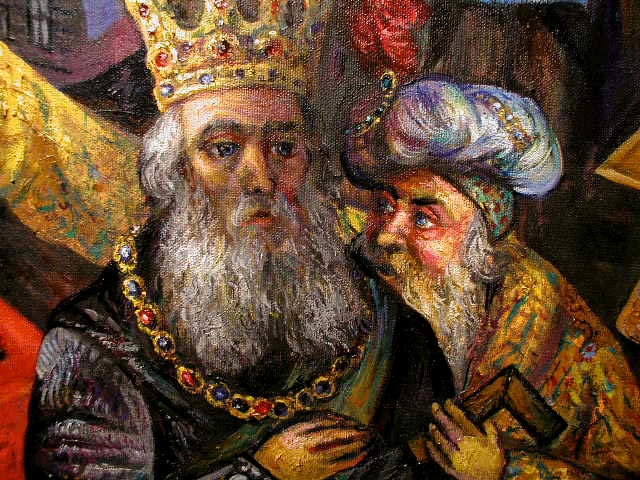
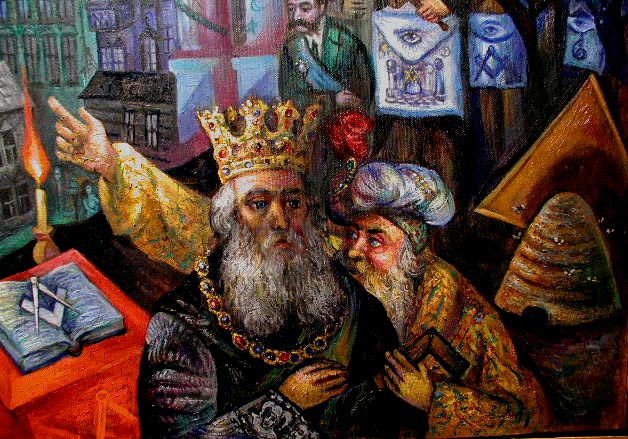
Roussimoff creates a contemporary interpretation of Masonic history in
accordance with the belief that the Craft dates back to Biblical times. Using
contrasting light and dark, Roussimoff shows
Master Hiram Abiff helping King
Solomon fulfill his great vision. In this painting the planning for the Holy
Temple of Jerusalem is interpreted as an ongoing search to build civilization
and to better oneself through the attainment of light, understanding, love and
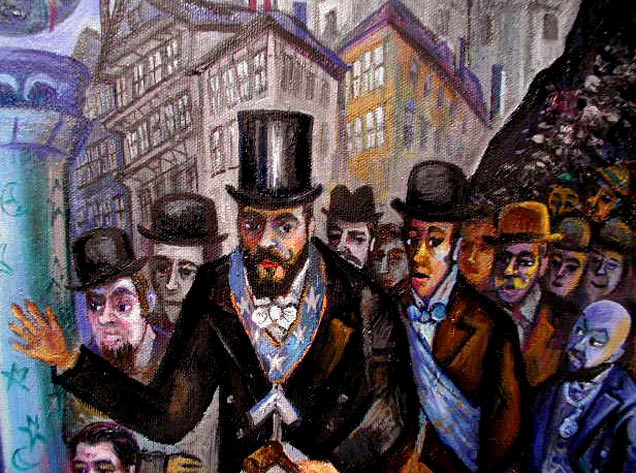
knowledge. In the upper right is the
Lodge, integral to Masonic life. Within the
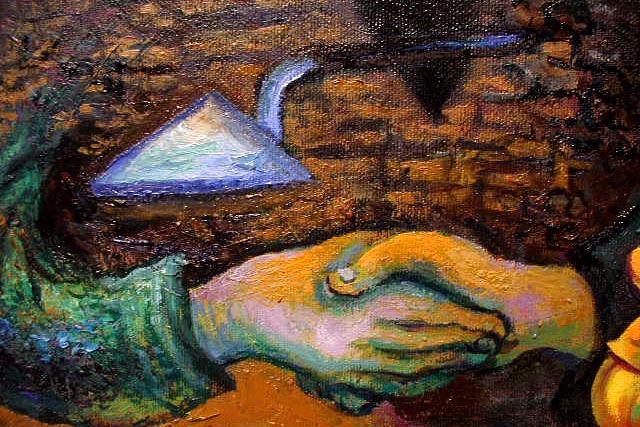
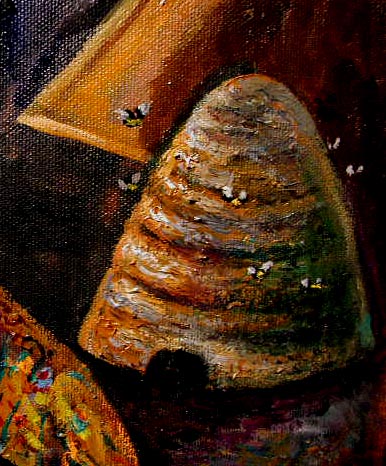
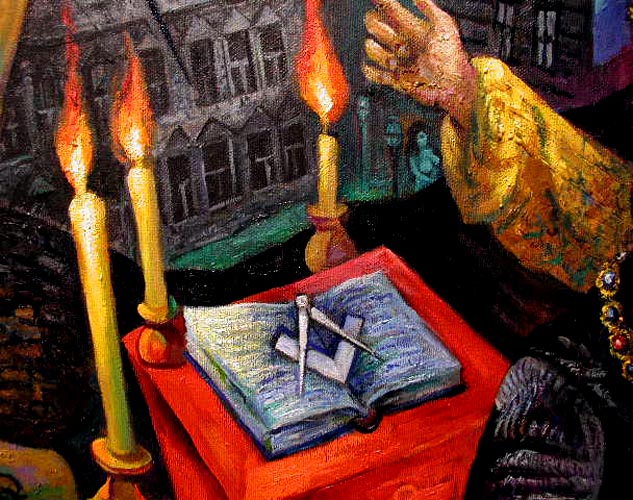
composition are Masonic symbols, the two columns, the brotherly
grip, the
beehive,
the altar with
the candles, the Holy
Bible, and
the square and
compass.
The three great lights of Freemasonry show the way to all who seek it, flickering
through eternity. Above the city is the All-Seeing-Eye of the Great
Architect.
Roussimoff conceived this work as a message of hope for the future.
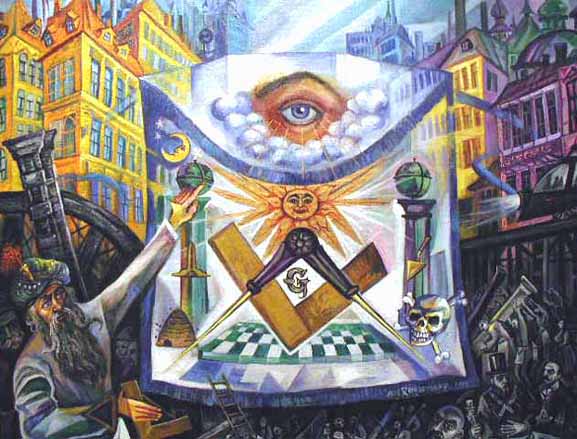
In
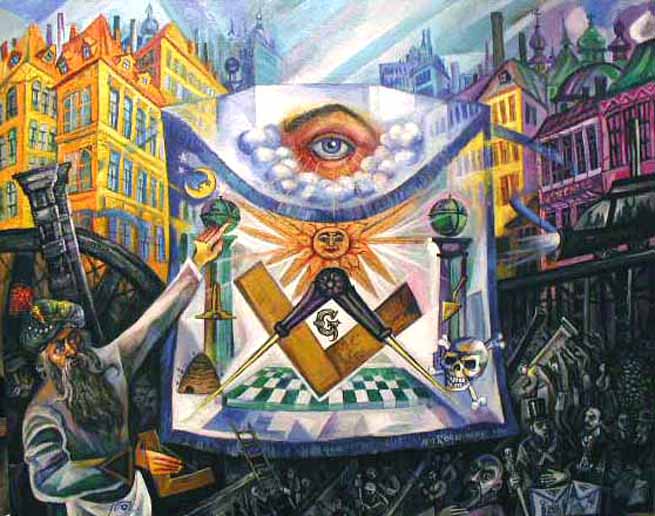
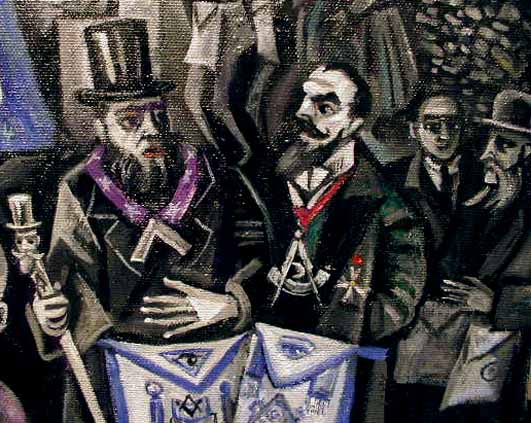
Masonic Apron:The Legacy
of Hiram Abiff a
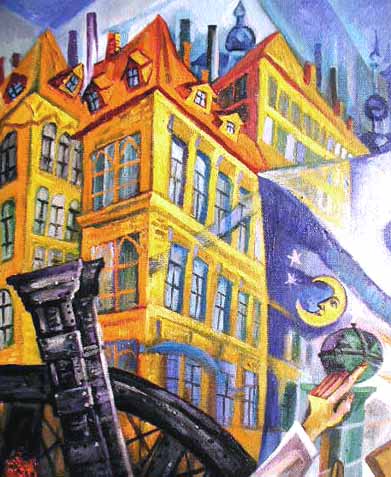
bustling metropolis, populated by industry and activity, serves as the
background for a monumental Masonic Apron (based upon historic
examples). The
Apron stands apart from and at the same time melds into the overall scene.
Master Hiram prophetically points to a multitude of
Masons, Master
Masons, Apprentices, as well as the Worshipful and Past Masters of various
Lodges, busily attending to their tasks, erecting pillars and laying foundation
for a
Temple
of the future, with the approving support of their wives and sisters.
In
Masonic Apron:The Legacy of Hiram
Abiff the
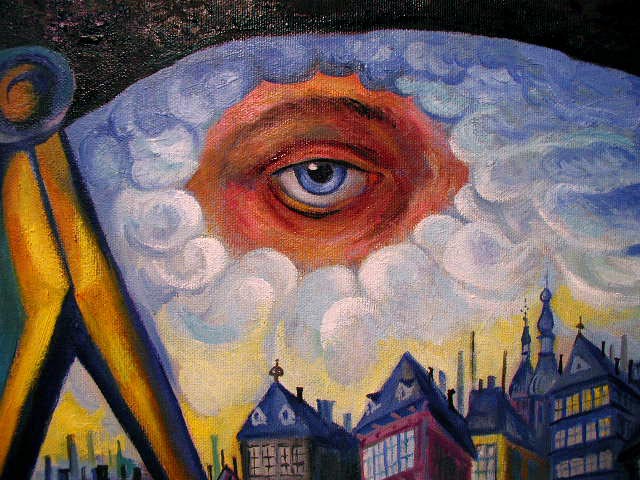
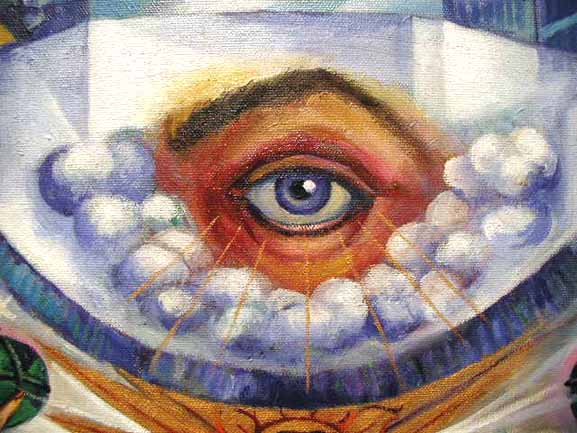
All-Seeing-Eye is quite life-like in appearance. Because of the Deity's
centrality to Masonic belief, Roussimoff chose to paint the All-Seeing-Eye as a
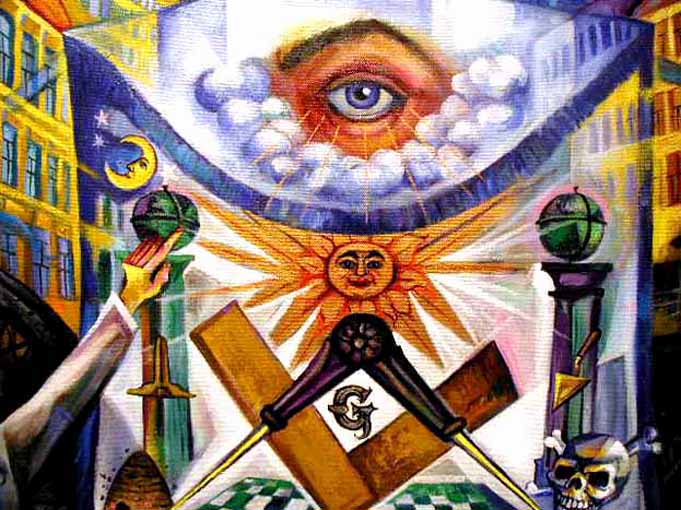
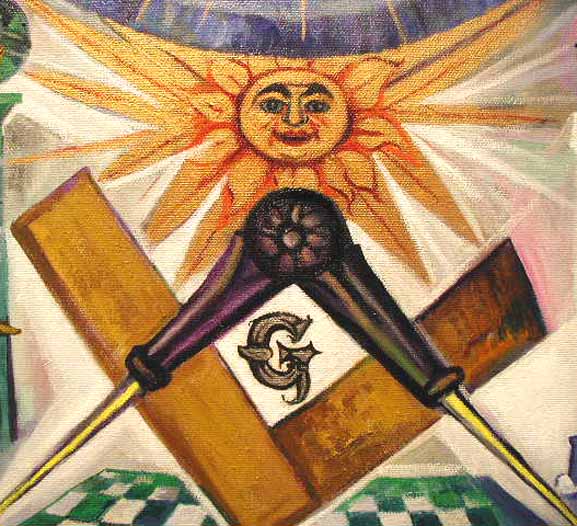
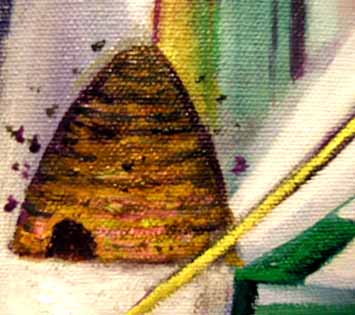
realistic living entity, rather than a two-dimensional illustration. The Apron
features a Square and Compass alongside the glowing Sun, the pillars Jachin and
Boaz, the Checkered Floor, the
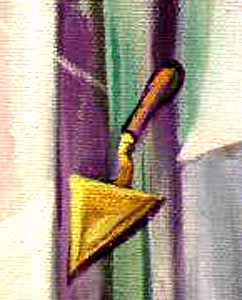
Beehive, and the Workman's
Trowel. Mortality is
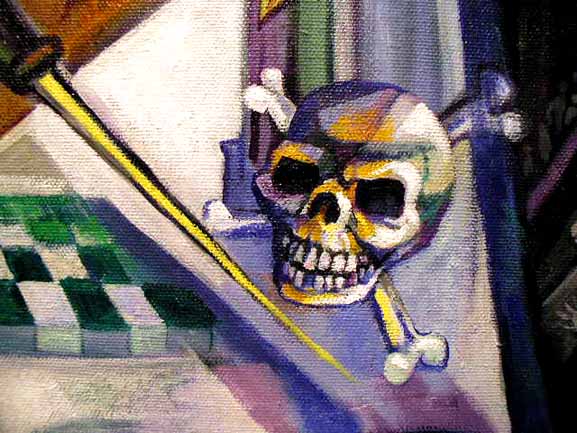
represented by the Skull and
Crossbones. The overall composition is organized
into different planes, where cubistic triangles and squares have been discreetly
interwoven.
In
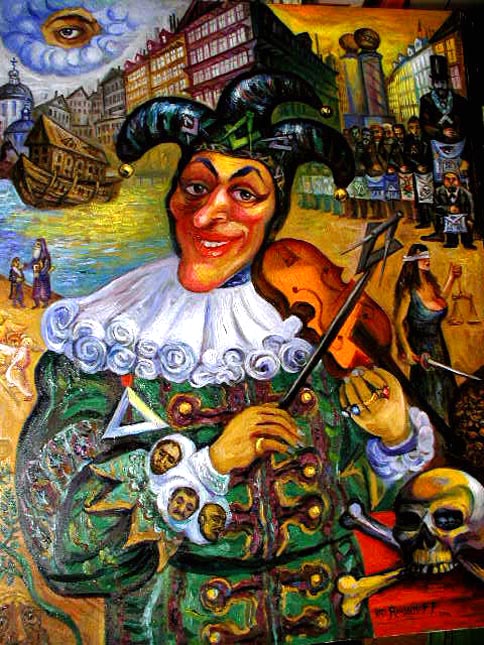
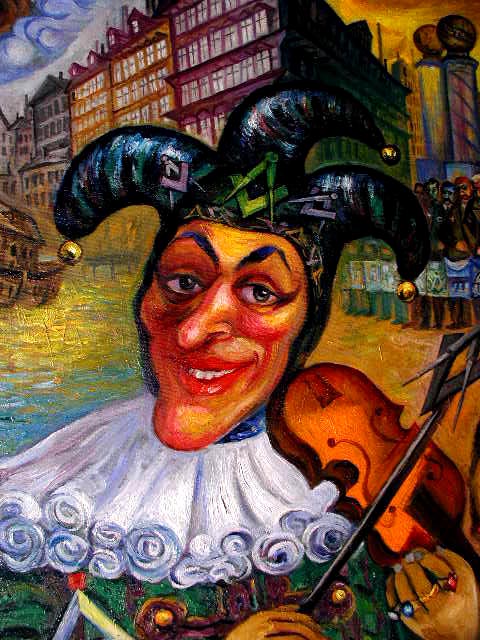
the very colorful Freemasonry: A
Musical Allegory, a fiddling
medieval court jester, symbolizing the arts, guides the viewer through a
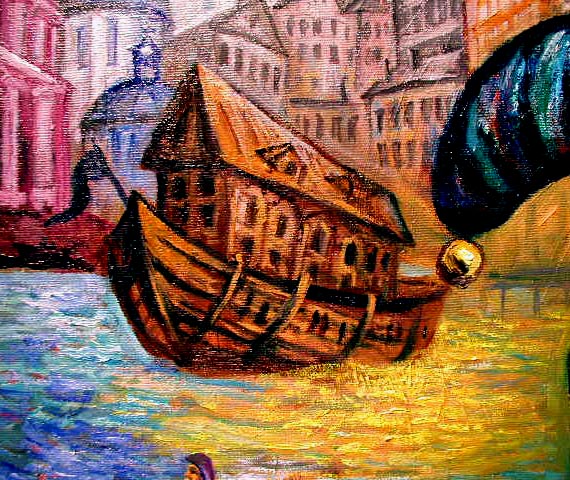
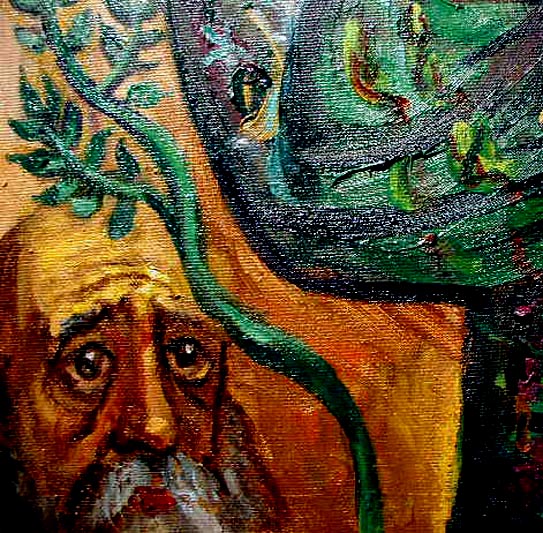
landscape of Masonic philosophies. Noah's
Ark
, Jacob's Ladder, and the Acacia twig are among the recognizable images.
Currently,
Roussimoff is completing a Masonic themed triptych. The three paintings,
designed to be displayed together, similar in concept, but smaller in size than
a medieval altar piece, tell one continuous story. Each canvas represents a
separate aspect of civilization, according to Roussimoff’s own interpretation
of Masonic lessons and history. The left panel deals with the past; the center
panel represents the present, and the right panel anticipates the future. Hiram
and King Solomon are fundamental presences in each piece.
Known
mostly for his colorful depictions of Russian and Ukrainian folk life,
references to Freemasonry are sometimes incorporated into the artist’s non-masonic
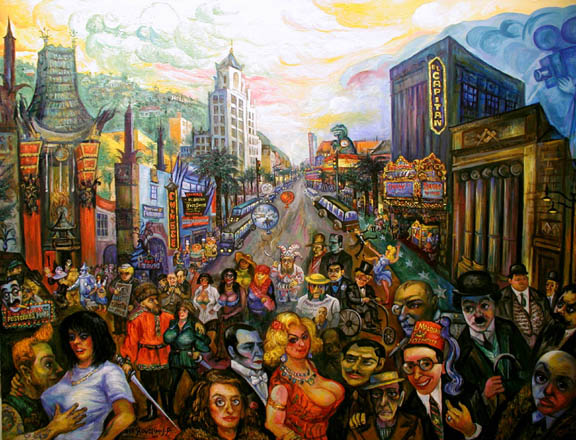
works. Roussimoff recently completed a series of oil paintings, entitled A Russian Views America,
devoted to American cities which impress him, and he included
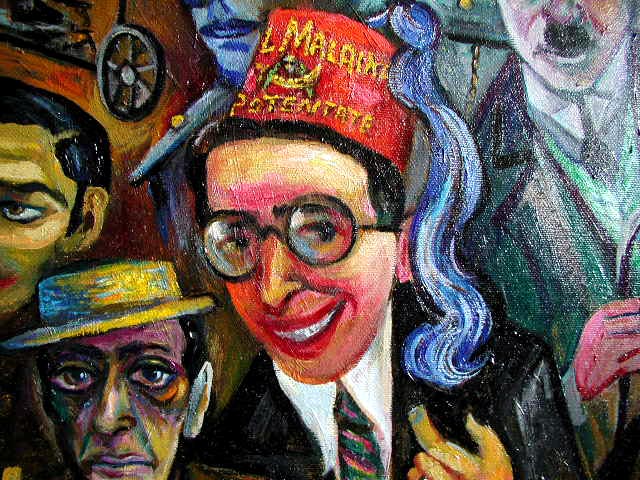
Masonic elements in almost every artwork. Hollywood Eternal
is an homage to the legendary film stars of yesteryear. In the foreground stands
Harold Lloyd, dressed in his Shriner Potentate Uniform. Among the many actors
depicted are several Masons: Oliver Hardy, Harpo Marx, John Wayne and Clark
Gable. Prominent in the background is
Hollywood
’s historic
Masonic
Temple
, now a television studio.
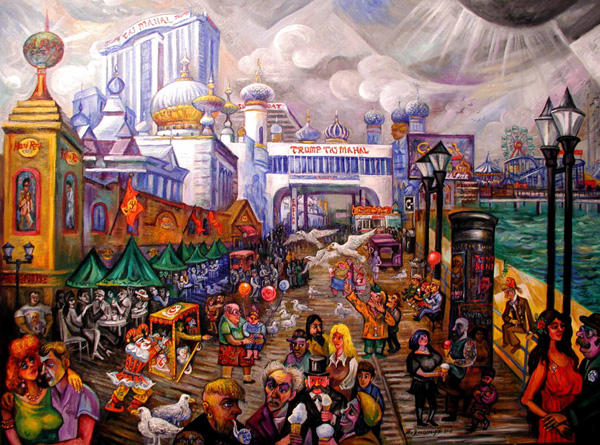
In
another Roussimoff work,
The Boardwalk of Atlantic City,
many visitors stroll along the walkway. Among the crowd sits a solitary Shriner,
reflecting on the past, when the great Shrine conventions and parades were held
in this seaside resort.
Ari
Roussimoff sums up his painterly vision of Freemasonry when he says, “Freemasonry has had a powerful impact on me. It is a way of
life, a tremendous philosophic guide and moral code. For me it has always been
highly spiritual. In these particular pictures, rather then using icons of the
Craft to illustrate specific Masonic tracts, I wanted to paint scenes which
speak to both Mason and non-mason alike, yet show that they were painted by
someone who is in fact a Mason.”
| |
|